
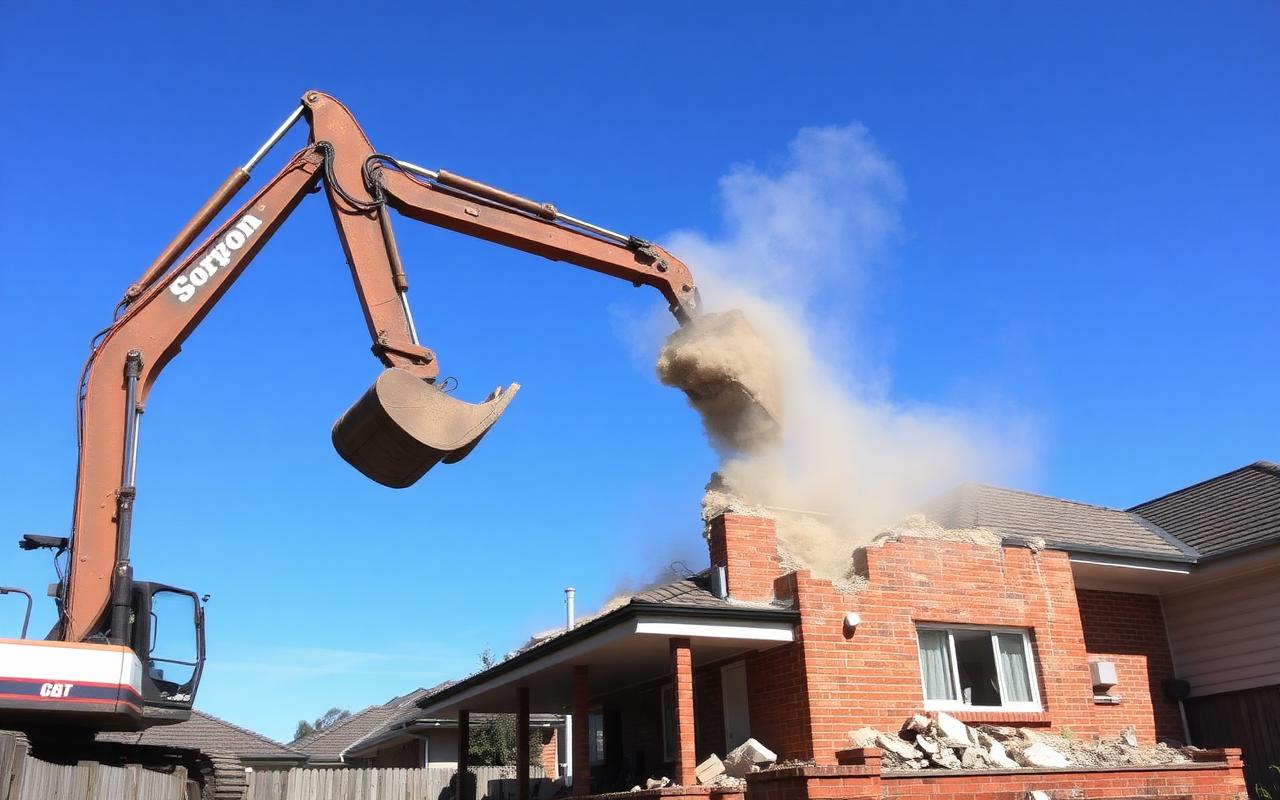
A Sydney knock-down rebuild lives or dies in the planning phase. Once the excavator is on site the demolition itself is fast — but everything before that day is paperwork, surveys, neighbour conversations and utility disconnections that have to happen in the right order. This planning guide walks through the decisions an owner needs to make before signing a residential demolition contract, the variables that change the program, and the documents your contractor will ask for on day one.
Step 1: Confirm the approval pathway before anything else
The first question on any Sydney house demolition isn't "who do I hire" — it's "what approval do I need". Most knock-down rebuilds in NSW go through a Complying Development Certificate (CDC) issued by a private certifier in 7–10 working days. Heritage homes, properties in a Heritage Conservation Area, significant tree removals and bushfire-affected sites need a full Development Application (DA), which runs 6–12 weeks. Engage a private certifier in week one — they will tell you within 48 hours whether CDC is even possible. Our council-by-council breakdown of Inner West demolition permits covers the local quirks for Strathfield, Burwood, Canada Bay, Inner West and Parramatta.
Step 2: Commission the hazardous materials survey
SafeWork NSW places a legal duty on the person commissioning the demolition to arrange a written hazmat survey before work begins. The surveyor inspects the property, samples suspect materials, and produces a report that identifies every asbestos-containing material, lead paint, synthetic mineral fibre and PCB on the site. Your demolition contractor uses that report to plan the removal sequence and engage the right licensed removalist. Our full asbestos compliance checklist walks through your duties end-to-end. Don't skip this step — quoting demolition without a hazmat report is guesswork, and the surprises always land in the owner's lap.
Step 3: Map the site access honestly
Site access is the single biggest variable in a Sydney suburban demolition program. The questions to answer before quoting:
- Can a tipper truck and 20-tonne excavator turn into the property without crossing a neighbour's driveway?
- Are overhead Ausgrid wires low enough to need temporary shutdown for plant movements?
- Is on-street parking permanently occupied? Will you need a temporary works zone permit from council?
- Are there party walls, shared fences or boundary trees that need protection or separate approvals?
- Is the driveway grade safe for loaded trucks, or do you need temporary ramping?
Tight Inner West blocks often push contractors toward smaller plant — a 5-tonne mini instead of a 20-tonne machine — which means more truck loads and a slightly longer on-site programme. Honest access assessment up-front beats arguing about it on day three.
Step 4: Start utility disconnections early
Utility disconnections are the silent killer of demolition timelines. They run in parallel with approvals but sit on the critical path of nearly every job. Typical Sydney lead times:
- Ausgrid electricity disconnection: 4–6 weeks
- Jemena gas abolishment: 4–6 weeks
- Sydney Water disconnection: 2–3 weeks
- Telstra / NBN: 2–4 weeks
Lodge every disconnection the same week you sign your demolition contract. Holiday periods, especially the Christmas–January window, can blow out gas and electricity disconnections to 8 weeks or more. Your demolition contractor cannot start structural demolition until the disconnection certificates are in hand.
Step 5: Plan for council-specific conditions
Beyond the main approval, most Sydney councils impose conditions that owners often miss:
- Tree Preservation Orders. Strathfield, Canada Bay, Burwood and Inner West all protect mature trees. Removal requires a separate arborist report and council approval — often the longest-lead item on the whole project.
- Dilapidation reports. Required for neighbouring properties on most terrace and semi-detached jobs. Brief an engineer early so the report is signed before demolition.
- Section 68 approvals. Cover hoardings on public land, stormwater works, road closures and street skip placement. Most demolition jobs need at least one.
- Waste Management Plans. Burwood, Inner West and others want a documented plan showing where C&D waste is going. Your contractor should provide this with the quote.
Step 6: Sequence asbestos clearance ahead of structural demolition
Asbestos is removed by a licensed Class A or Class B removalist before structural demolition can begin. On a typical Sydney house, bonded asbestos takes 2–4 days plus a clearance inspection and a written clearance certificate. Friable asbestos — uncommon in residential, more common in commercial — needs a 5-day SafeWork notification, full enclosure and negative-pressure ventilation. Build this into the program before booking the demolition crew so the excavator isn't sitting idle on day one.
Step 7: Decide what stays
Most owners assume "demolition" means everything down to dirt. Sometimes that's right, sometimes it isn't. The variables to confirm with your builder before quoting:
- Are the existing slab and footings being reused, or fully removed?
- Are boundary retaining walls staying or going?
- Is the existing driveway crossover being retained for construction access?
- Are mature trees being protected (with tree protection fencing) or removed?
- Is the swimming pool — if there is one — being demolished and back-filled, or kept?
Each of these decisions changes the quote, the program and the waste profile. A good contractor will ask all of them at the site visit; if they don't, push back.
Step 8: Plan the waste before the first wall comes down
A standard Sydney three-bedroom brick-and-tile house generates roughly 8–12 tipper-truck loads of waste — brick, concrete, timber, roof tile, plasterboard, carpet, metal and green waste. A responsible demolition contractor sorts on site, recycles 70–90% through C&D facilities, and tracks every load to an EPA-licensed destination. If you're handling the cleanup yourself or doing a partial demolition, our construction rubbish removal service handles the same waste streams with full chain-of-custody documentation. Ask any quoting contractor where waste is going and request the dockets — landlords, insurers and councils all care about this paper trail.
Step 9: Brief the neighbours
Sydney house demolitions sit metres from neighbouring homes. A 30-second door-knock before the first machine arrives prevents 80% of complaints. Tell neighbours the start date, the expected duration, the working hours (usually 7am–5pm Monday to Friday, 8am–1pm Saturdays under standard NSW conditions), the contractor's phone number and what to do if anything goes wrong. Polite communication is free and disarms most disputes before they start.
Step 10: Confirm insurance and licences before signing
Every demolition contractor working in NSW must hold the appropriate SafeWork demolition licence and current public liability insurance. Ask to see both before signing. Defence Demolition holds $20 million public liability insurance, employs our own crews directly, and supervises every project owner-to-owner. We work from our Homebush base across the entire Inner West and Parramatta corridor — fast mobilisation, local council knowledge and direct trade relationships make the planning steps above quicker for our clients. Send us your address and approval status and we'll come back with a realistic program within 24 hours.
The shortest planning checklist
- Engage a private certifier in week one.
- Commission a hazardous materials survey.
- Lodge utility disconnections the day you sign.
- Confirm tree, dilapidation and Section 68 requirements with council.
- Sequence asbestos clearance before structural demolition.
- Lock in waste destinations and dockets.
- Brief the neighbours.
- Verify your contractor's licence and insurance.
Get those eight steps right and your Sydney house demolition will run on schedule, with no surprises and no compliance dramas. Want a second pair of eyes on your project plan? Get in touch — we've planned hundreds of Sydney knock-down rebuilds and can usually tell you the critical-path risks in one phone call.
Frequently asked questions
When should I start planning a Sydney house demolition?+
As soon as you've committed to a knock-down rebuild. The longest lead items — utility disconnections and council or CDC approvals — sit on the critical path and can take 6–10 weeks before a machine ever rolls onto site.
Do I need a hazmat survey if the house looks clean?+
Yes. Almost every Sydney home built before 1990 contains some bonded asbestos in eaves, bathrooms, vinyl flooring or fencing. SafeWork NSW requires a written hazardous materials survey from the person commissioning the demolition before work starts.
What access issues delay Sydney house demolitions most?+
Narrow Inner West streets, low overhead wires, on-street parking, neighbouring fences and steep driveways. Tight sites push you toward smaller plant and more truck movements, which lengthens the program but not necessarily the on-site demolition days.
Can I demolish before my new build approval is finalised?+
You can, but most owners wait until the new build CDC or DA is approved so the block isn't sitting empty paying council rates and insurance. Sequencing the demolition close to the builder's start date is almost always smarter.